British Parliament
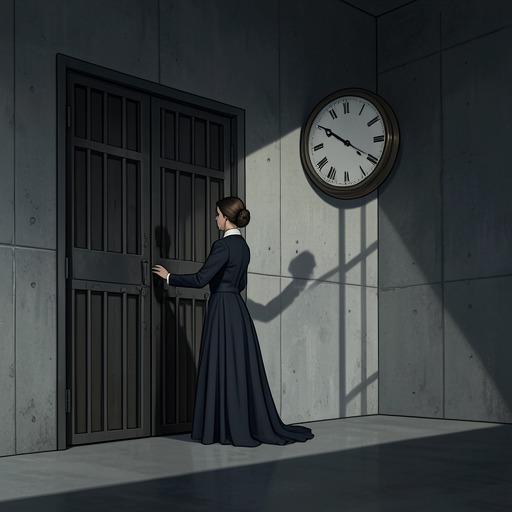
Night and DayBritish Parliament figures in the novel as both the institutional obstacle to women’s suffrage and the distant audience reformers hope to move. Its power is felt in a parliamentary setback that sends Mary Datchet back to an agitated office, and in the activists’ competing faith that patient public argument, better organization, or a more forceful appeal might eventually secure change.
The suffrage campaign and its working rooms
The movement is represented not chiefly through parliamentary debate but through the labor of its organizers. Mary lends her conveniently placed rooms for fortnightly meetings of a society devoted to free discussion, then takes charge of shifting furniture and protecting breakable possessions. The scene makes political work practical and bodily: before anyone can debate reform, someone must clear the room, arrange the chairs, and make a place for the gathering.
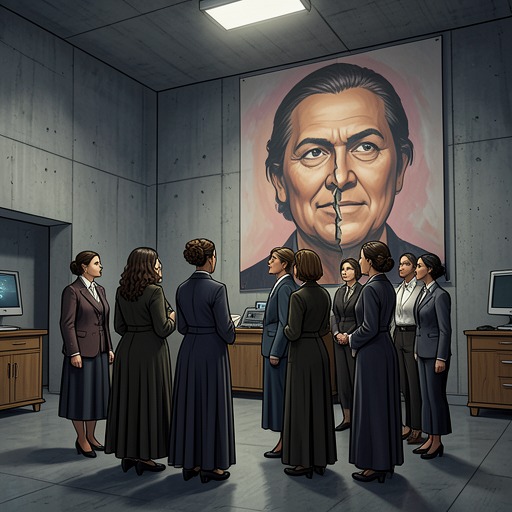
Mary’s daily work continues in a suffrage office at the top of a large house in Russell Square, shared with other societies whose typewriters compete in the hollow echo of its stone staircase. Her organization is short of funds, and she is preparing a series of entertainments to raise money. She hopes to bring interesting people together in a pattern that will catch Cabinet Ministers’ attention, then use that attention to present the old arguments with new force. The plan joins fundraising, publicity, and political persuasion, while showing how much work lies between a reforming idea and its intended parliamentary audience.
The effort also turns on small administrative decisions. Mary worries about economizing on notepaper without hurting Mrs. Seal’s feelings and imagines rebuilding the society on more radical lines. Ralph Denham criticizes the movement’s reliance on drawing-room meetings and bazaars, arguing that its organizers become trapped in details instead of taking up larger ideas. Mary surprises him by agreeing that she herself may have settled into a groove and saying that she would like to go somewhere far away. Their exchange exposes a tension between the necessary routine of organizing and the desire to escape routines that seem to limit political imagination.
Parliamentary setback and rival strategies
When Mary returns to the office, a parliamentary maneuver has once more put the vote beyond women’s reach. Mrs. Seal responds with indignation, reading the defeat as an insult to women and a setback for civilization; marked newspaper cuttings lie scattered through the office. She distinguishes the political leaders from the public, insisting that the case would win if it could be put directly to the people. Her response makes the setback a test of where reformers locate the obstruction: in popular opinion, or in the representatives who control parliamentary action.
Mr. Clacton answers with a cooler, procedural confidence. He treats reverses as normal in important political campaigns and proposes that the society meet its opponents’ maneuvering with more systematic preparation. His scheme includes revising the card index, issuing new lemon-colored leaflets, and mapping suffrage organizations across England, with each district’s documents filed for ready reference. He imagines the society as a telephone exchange connecting its central office to the country, gathering information about what people think and helping direct them toward what he regards as right. The plan converts defeat into a demand for infrastructure: political influence, in this account, depends on records, communication, and sustained local knowledge as well as argument.
Reason, rhetoric, and political purpose
Mrs. Seal sees the cause as larger than a single vote or organization. She presents it as a continuing obligation passed from one generation of reformers to the next, and calls it the cause of humanity as well as of women. Her rhetoric rests on the conviction that right and wrong are plain and that Parliament could improve human life through a few simple acts. At the same time, her interruptions to attend to a boiling kettle bring the ideal into contact with the ordinary work of the office.
Clacton does not dismiss eloquence, but argues that it should be joined to reason. He believes the movement lacks sufficiently intellectual foundations and imagines the public as requiring reason within an appeal shaped by sentiment. Their difference is not simply between conviction and indifference: both are committed to the cause, but Mrs. Seal trusts moral clarity and direct appeal, while Clacton emphasizes disciplined presentation and organized evidence. Parliament remains the place where these strategies must ultimately matter, yet the novel locates the campaign’s immediate life in offices, paperwork, public argument, and the persistence of people who continue after defeat.
Narrative significance
The parliamentary setback gives the suffrage thread a concrete political limit: patient work does not guarantee a favorable vote. It also sharpens the contrast between Mary’s practical organizing, Mrs. Seal’s expansive moral faith, and Clacton’s systems-minded approach. The institution is therefore more than a name for government. It marks the distance between women’s claims to justice and the political machinery that can withhold recognition, while the activists’ continued labor shows how a movement sustains itself in that distance.